Laurent Le Bel-Roux
Umwelt
From May 28 to 11 juillet, 2026
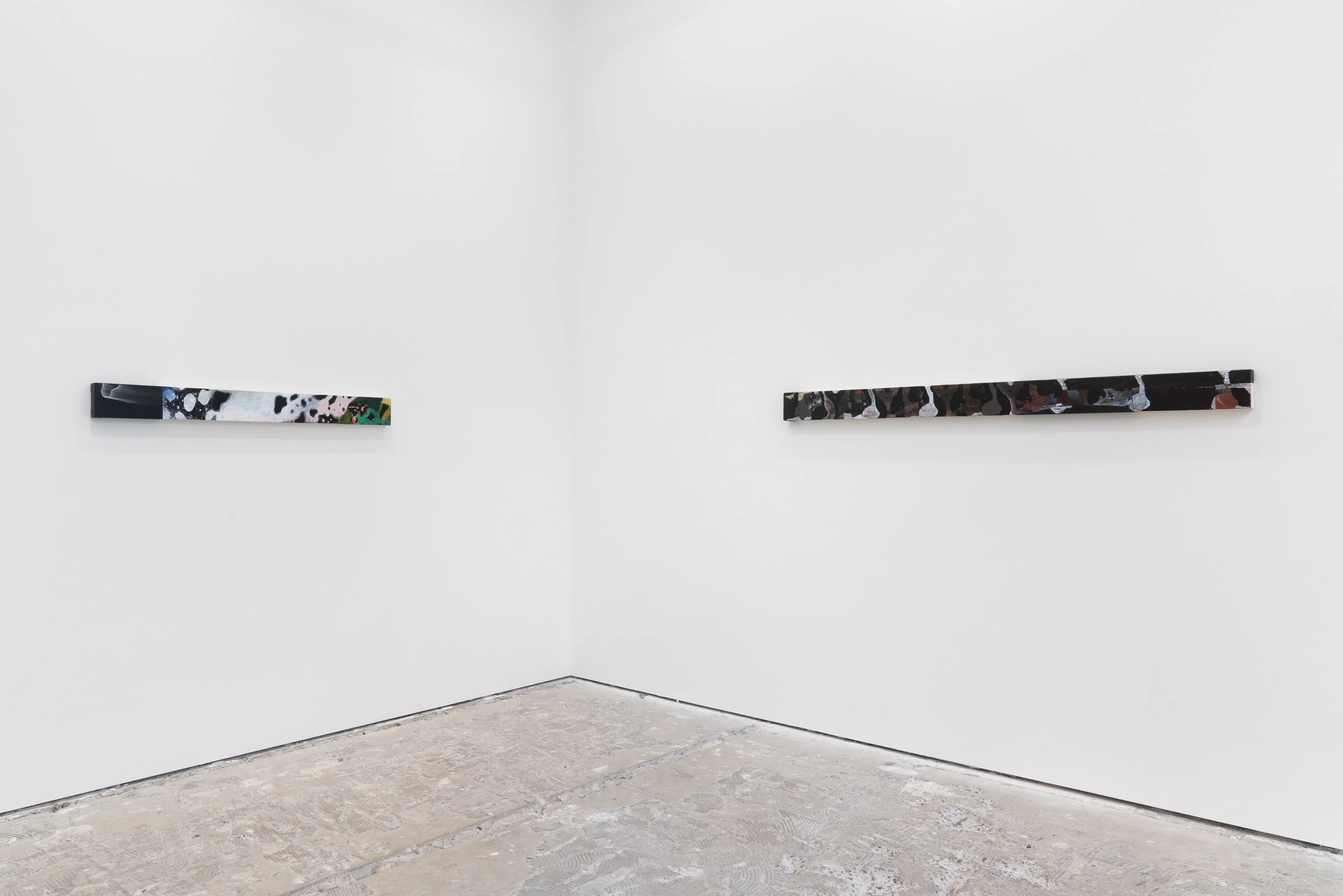
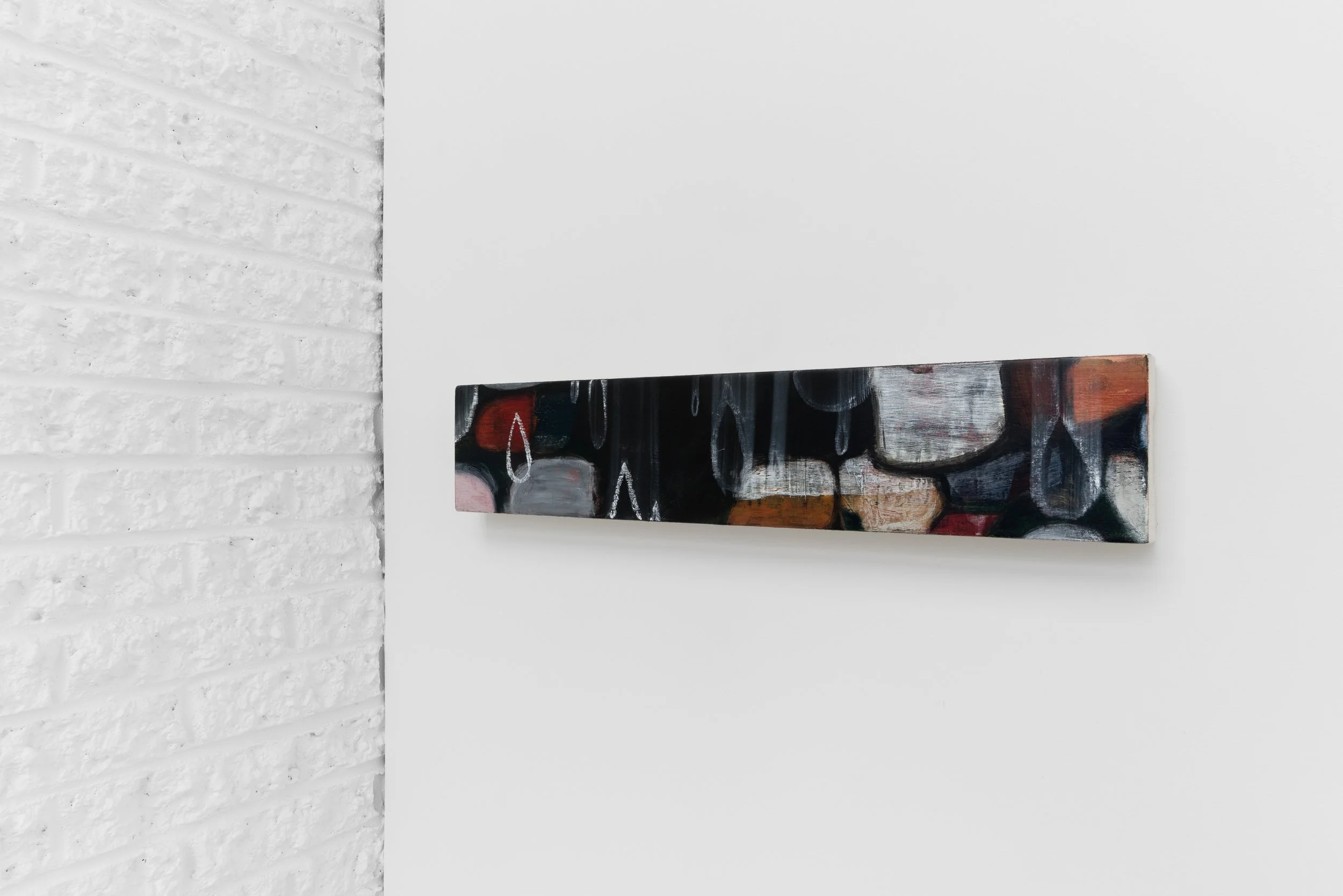
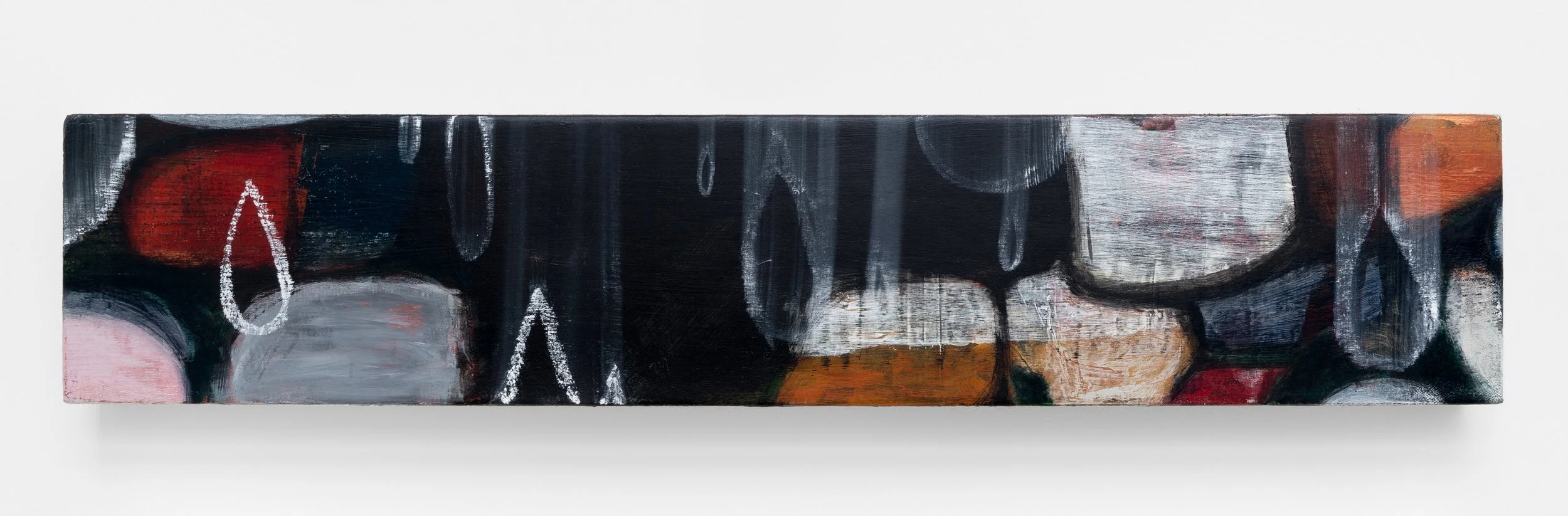
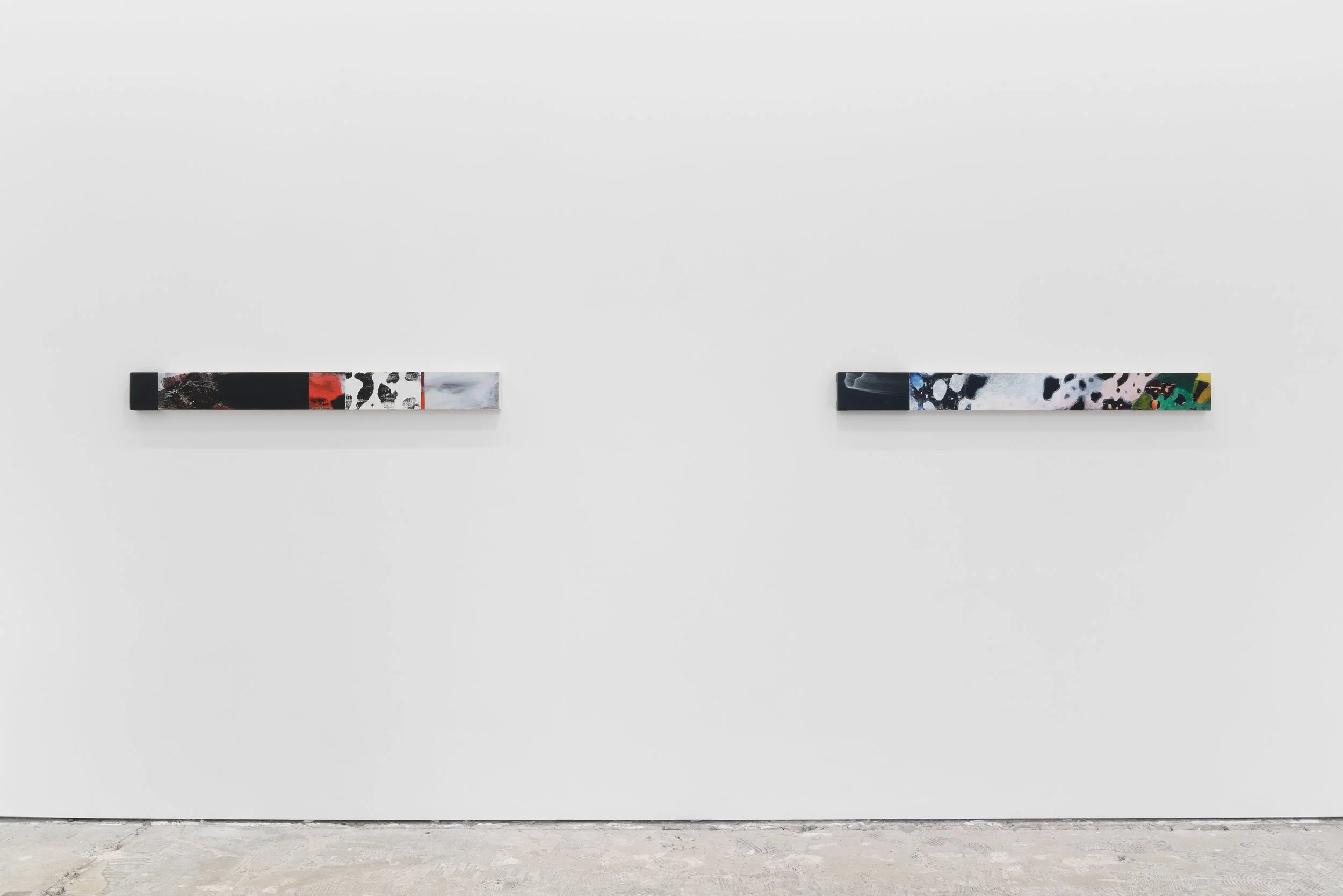
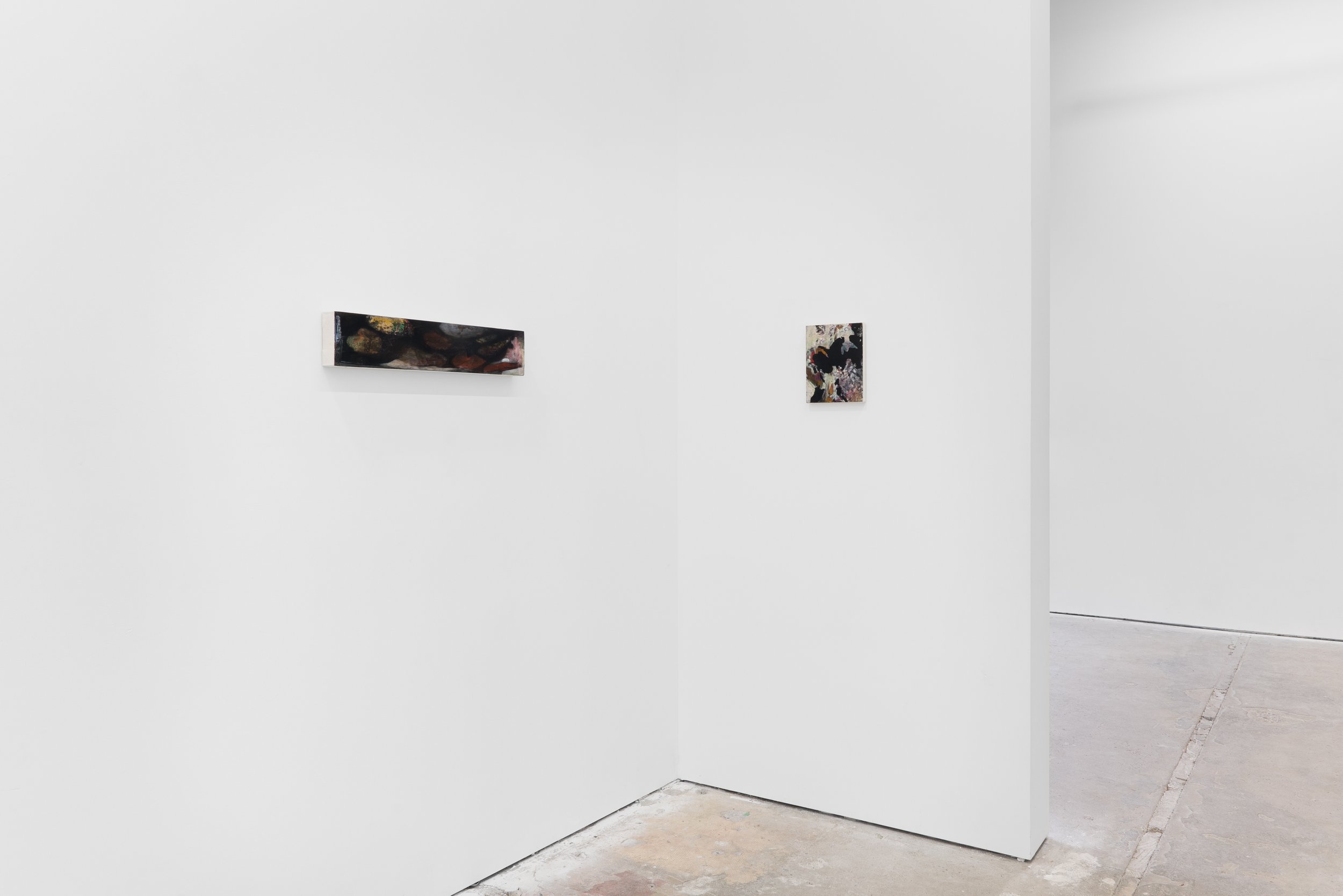
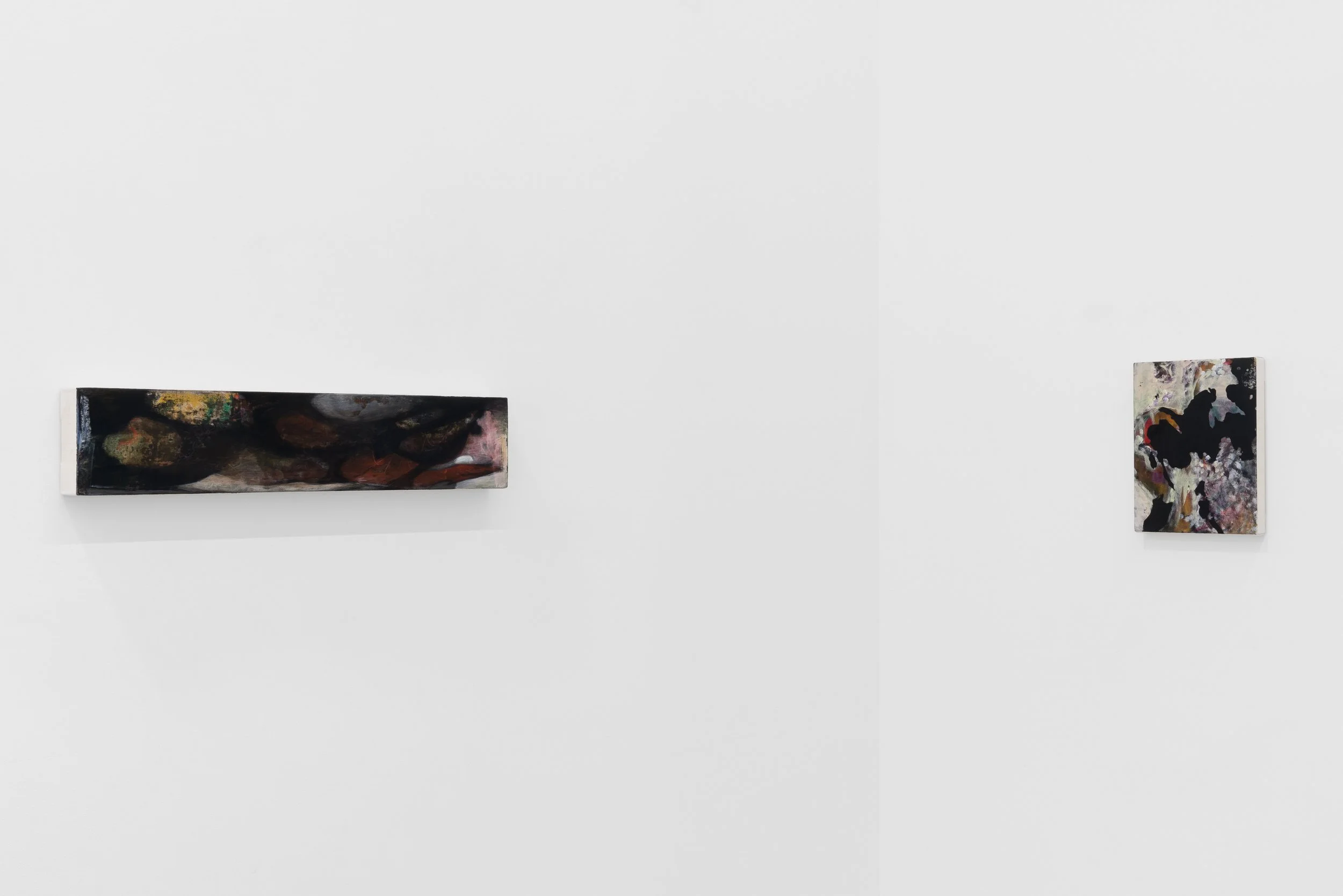
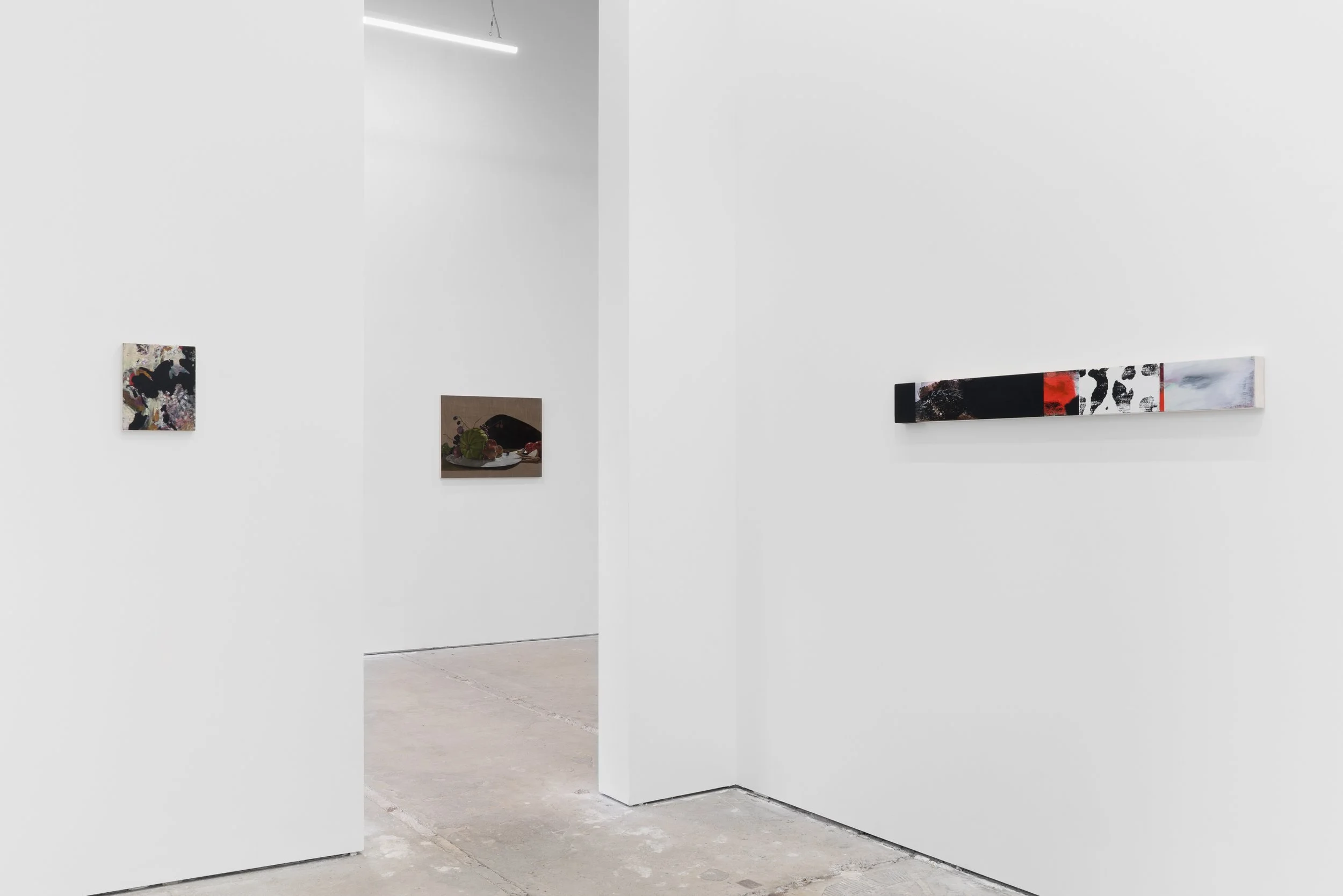
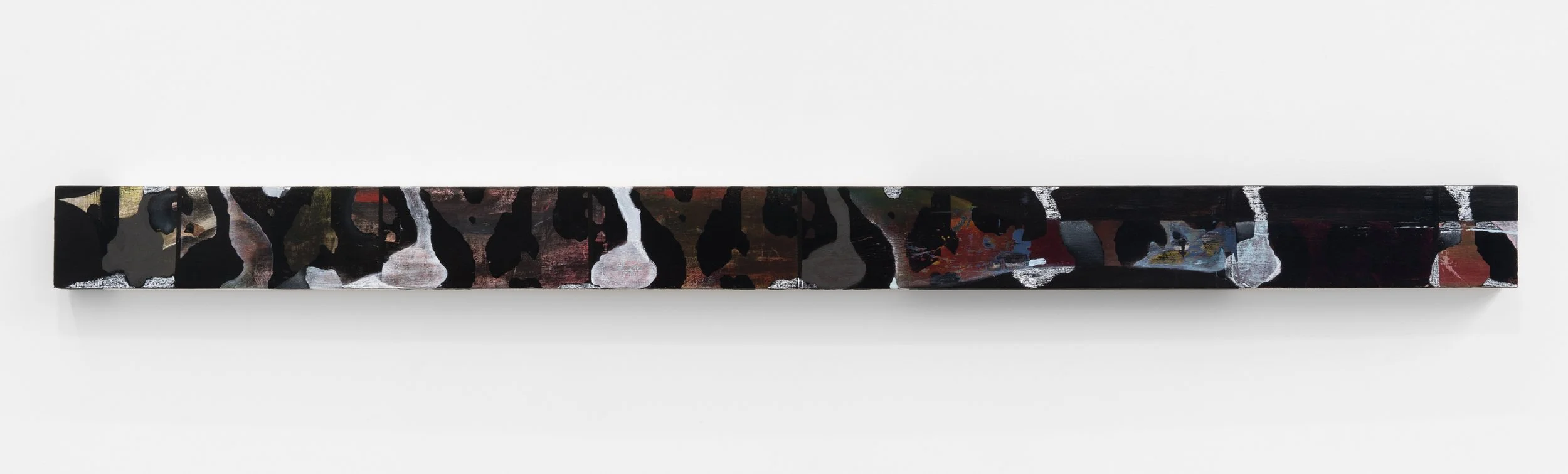
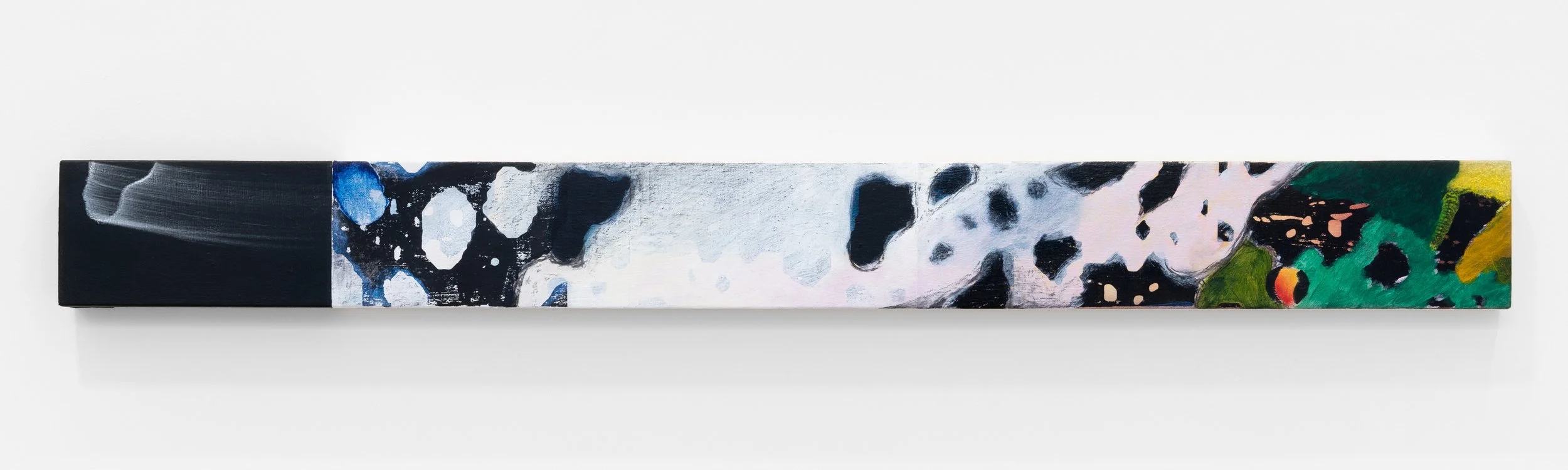
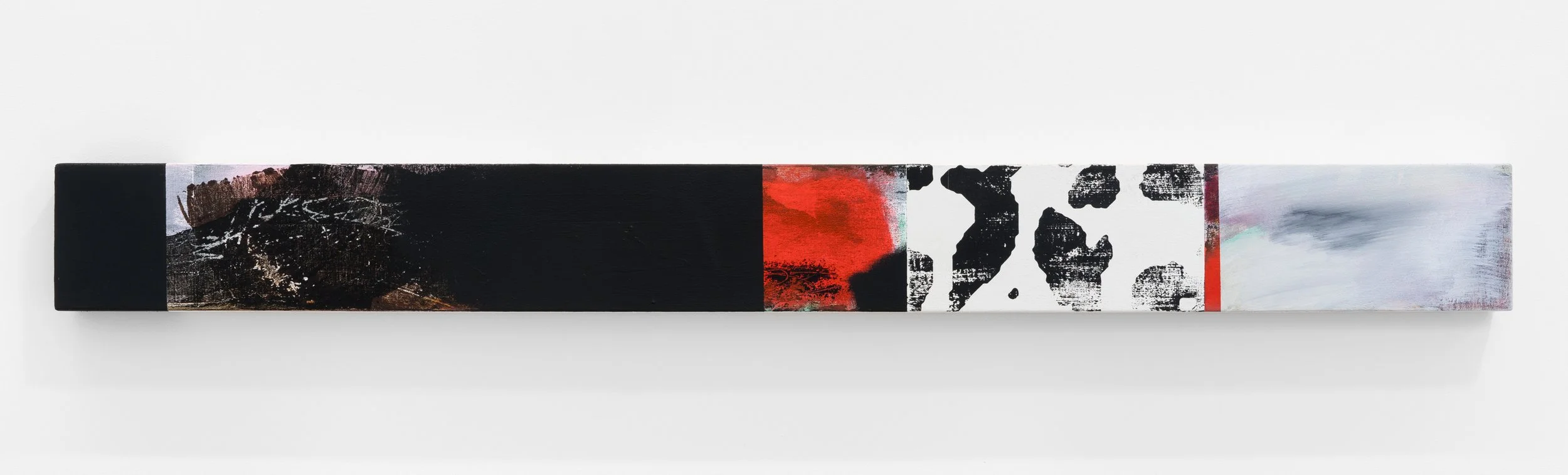
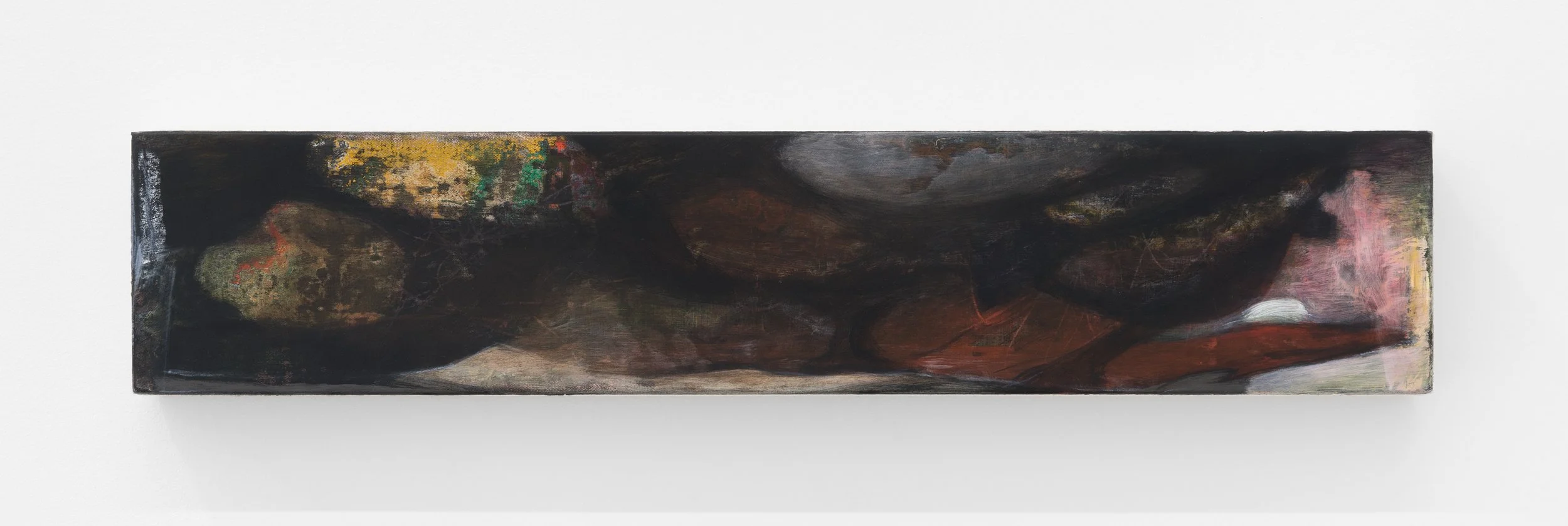
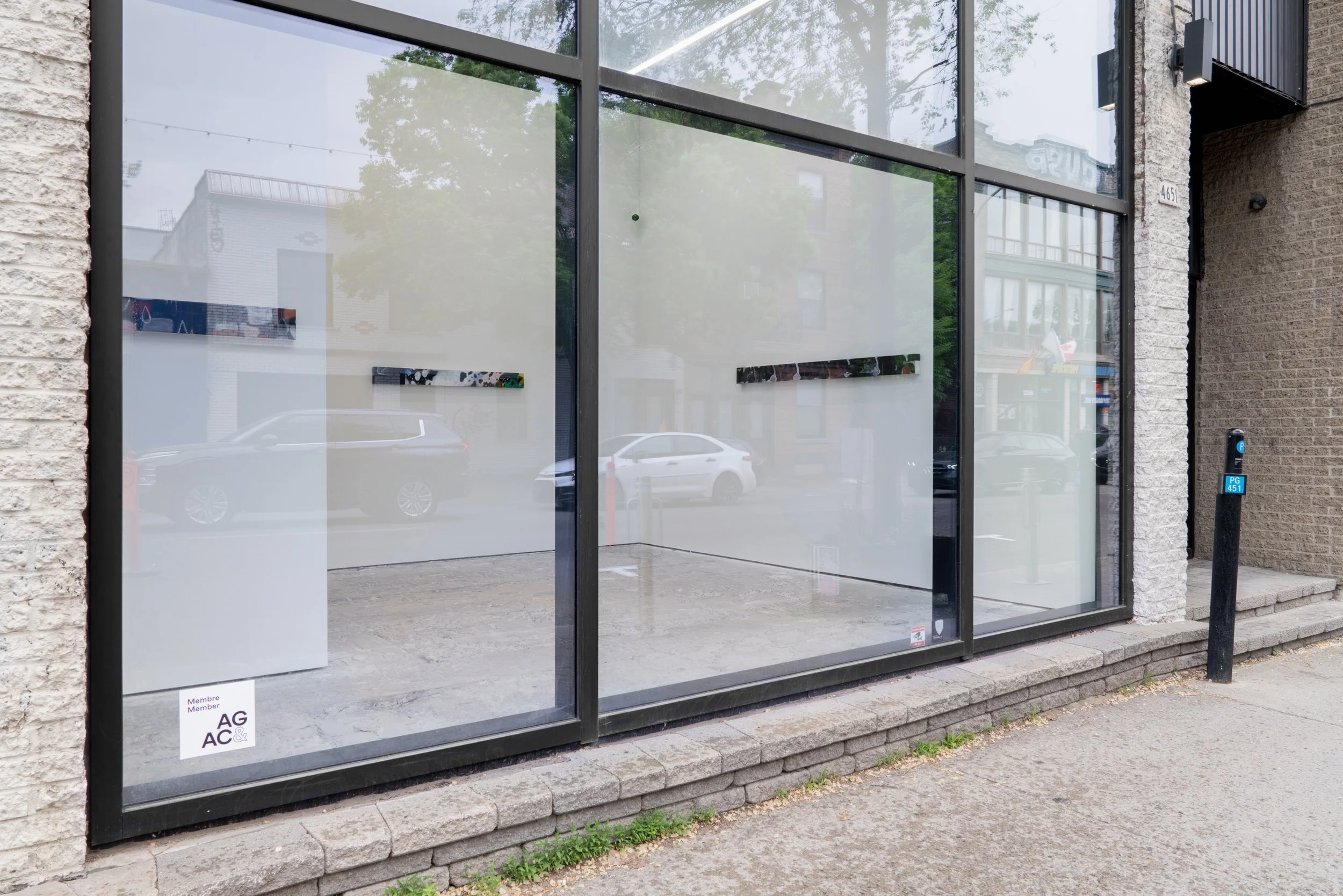
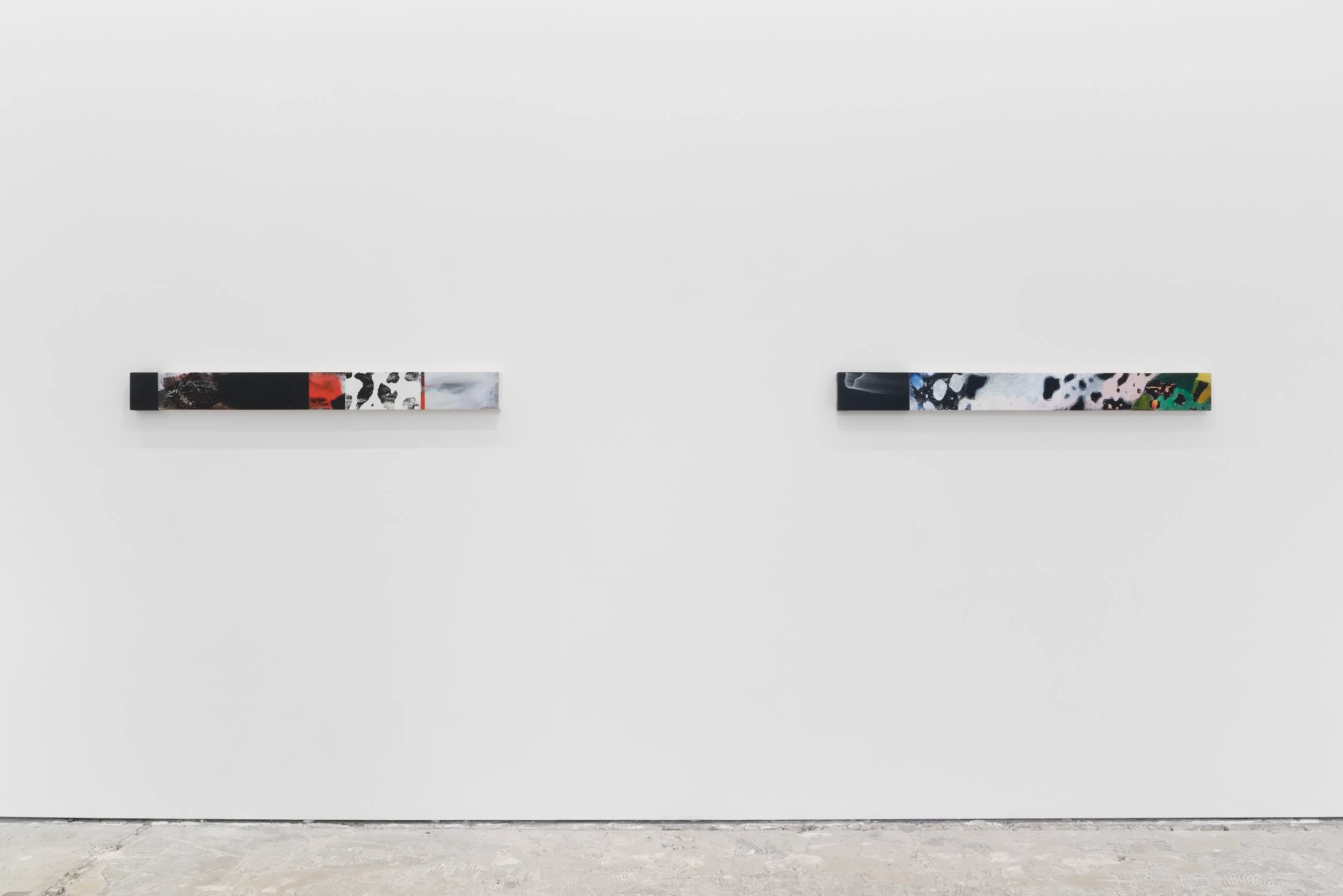
The paintings brought together for Umwelt appear as narrow horizontal bands of varying dimensions. They unfold across the gallery walls on a shared alignment, rhythmically guiding our gaze through the space. The works evoke a fragmented and interrupted vision, making any access to wholeness impossible and confronting us instead with thresholds and interstices. Images of what might lie outside the frame begin to form, only to withdraw again; nothing is ever fully grasped. This, moreover, is a game the artist particularly enjoys: unsettling viewers’ perception in order to interrupt our tendency to spontaneously make up associations and crystallize what we think we recognize.
“Each house has a number of windows which open to a garden: a light window, a sound window, an olfactory window, a taste window, and a great number of tactile windows. Depending on the manner in which these windows are built, the garden changes as it is seen from the house. By no means does it appear as a section of a larger world. Rather it is the only world that belongs to the house—its [Umwelt]. The garden that appears to our eyes is fundamentally different from that which presents itself to the inhabitants of this house.” (Uexküll, 2010, p. 200)
The title Umwelt refers to a conception of perception as a system of filtering and selection, conditioned by perceptual capacities defined through our senses. Rather than proposing a stable and universal reality, the German biologist and philosopher Jakob Johann von Uexküll advances the idea of partial experiences constructed not only from what can be perceived, but also from what remains inaccessible. This idea runs throughout the exhibition through an attention to the very mechanisms of seeing: framing, interruption, displacement, appearance, and withdrawal become the conditions through which the works are articulated.
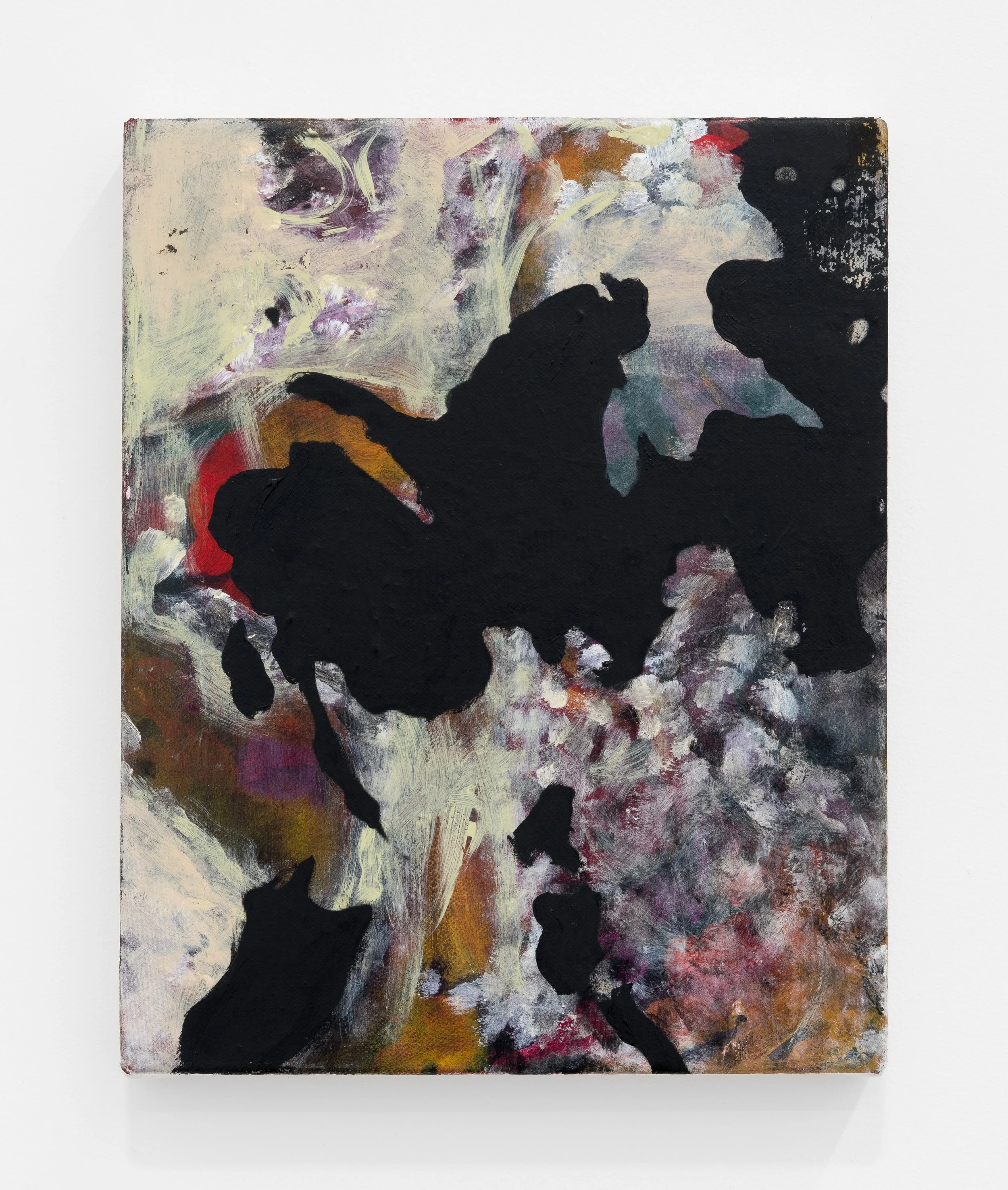
Laurent Le Bel-Roux’s process remains intuitive and fluid. The canvas is approached without rigid preparation, without a clearly defined preliminary sketch. At times, certain forms are traced, areas are marked out, or even colour names are noted down, but these indications remain deliberately open, sufficiently vague to allow for hesitation and changes in direction. For the artist, the pictorial surface becomes a site of stratification, where paintings are built through superimposition, erasure, and return. Acrylic, charcoal, and pastel accumulate in layers. At times, masses of paint partially harden and then crack, revealing earlier strata beneath. These material instabilities are welcomed by the artist, offering opportunities to see differently and to bring forth new relationships. Painting can then open itself onto another reality.
Through Umwelt, painting is conceived as a perceptual apparatus in which the visible remains continually suspended. No stable reading imposes itself; instead, the works activate a field of shifting relations that keeps them in a state of destabilization. The experience of looking is fundamentally active, and seeing no longer consists in immediate recognition, but in navigating between contradictory clues. Fragments that resist coherence are assembled, and what unfolds there concerns less the affirmation of an image than the conditions of its emergence.
-Mathilde Bertrand Pilon
Laurent Le Bel-Roux holds an MFA from the University of Texas at Austin (2025) and a BA in Arts visuels et médiatiques from UQÀM (2021). His work has been presented in several solo and group exhibitions, including at Liliana Bloch Gallery (Dallas, Texas, 2025), the Visual Arts Center (Austin, Texas, 2025), Galerie Nicolas Robert (Montreal, 2023, 2025), Occurrence (2023), SKOL (2023), Galerie Duran|Mashaal (2023), and Cache Studio (2023). During his studies, he was awarded the Graduate Continuing Fellowship from UT Austin (2024–25) as well as the Fond de la Faculté des arts from UQÀM (2019). His work is part of collections including Scotiabank, the City of Laval, and Montreal.