Raúl Aguilar Canela
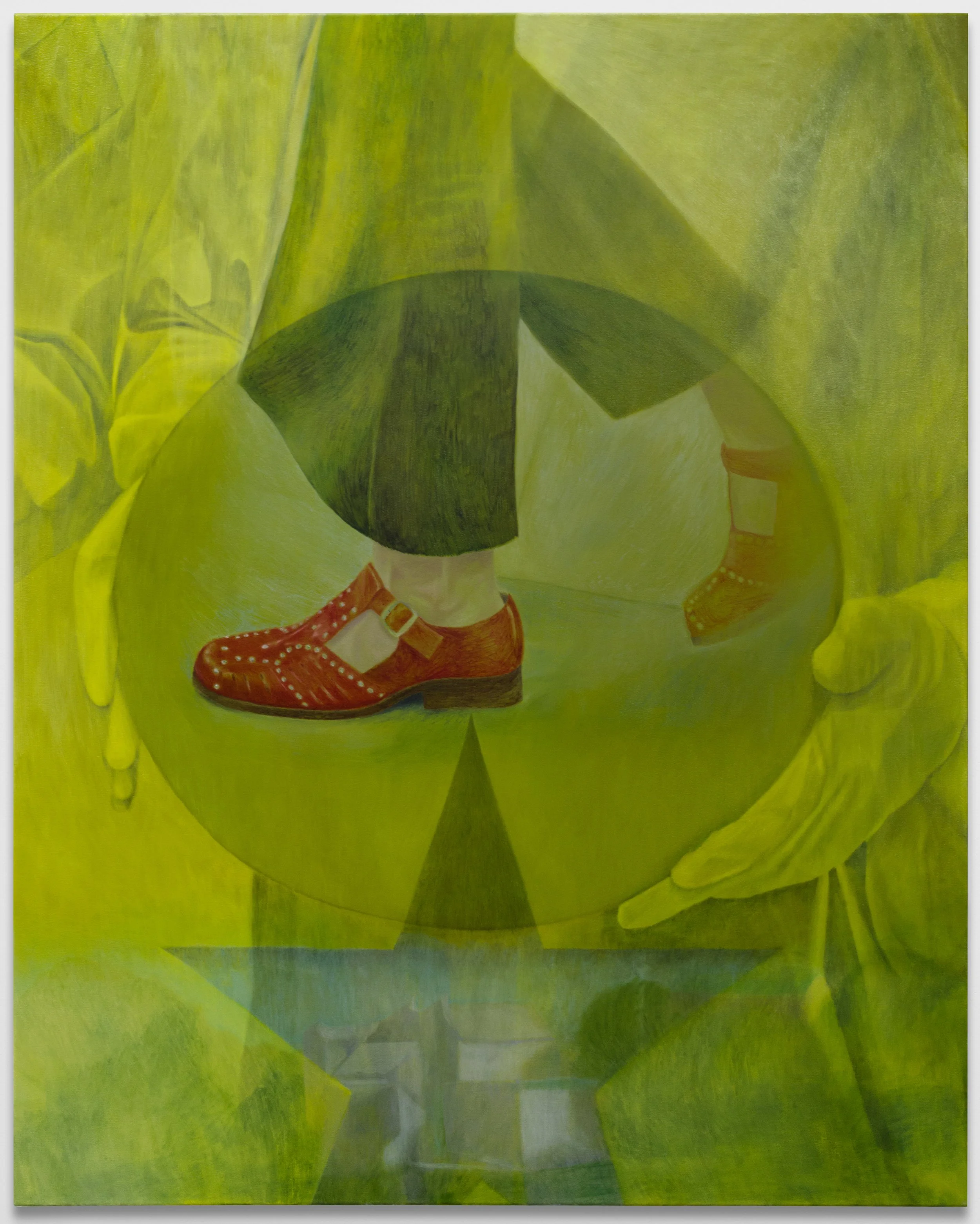
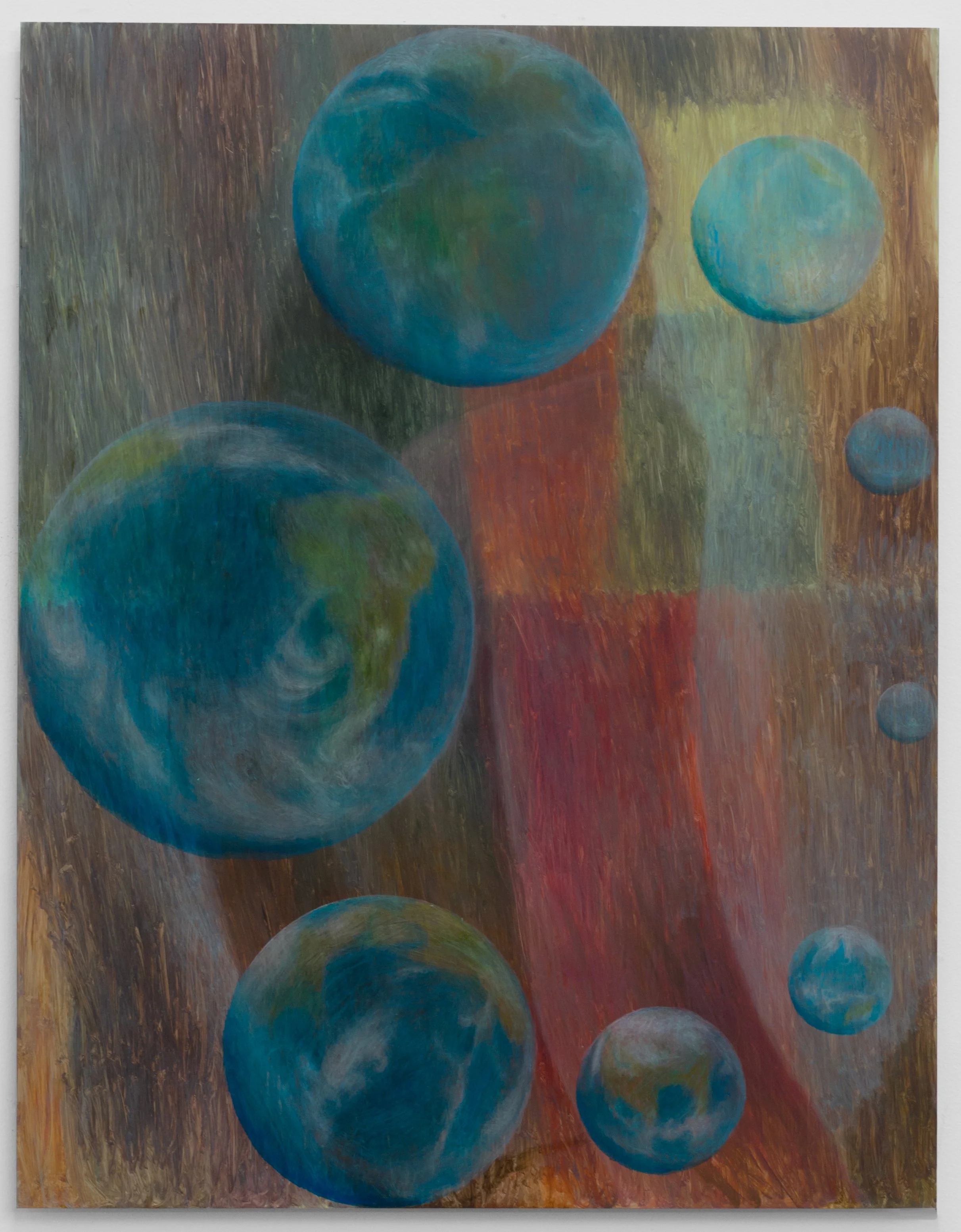
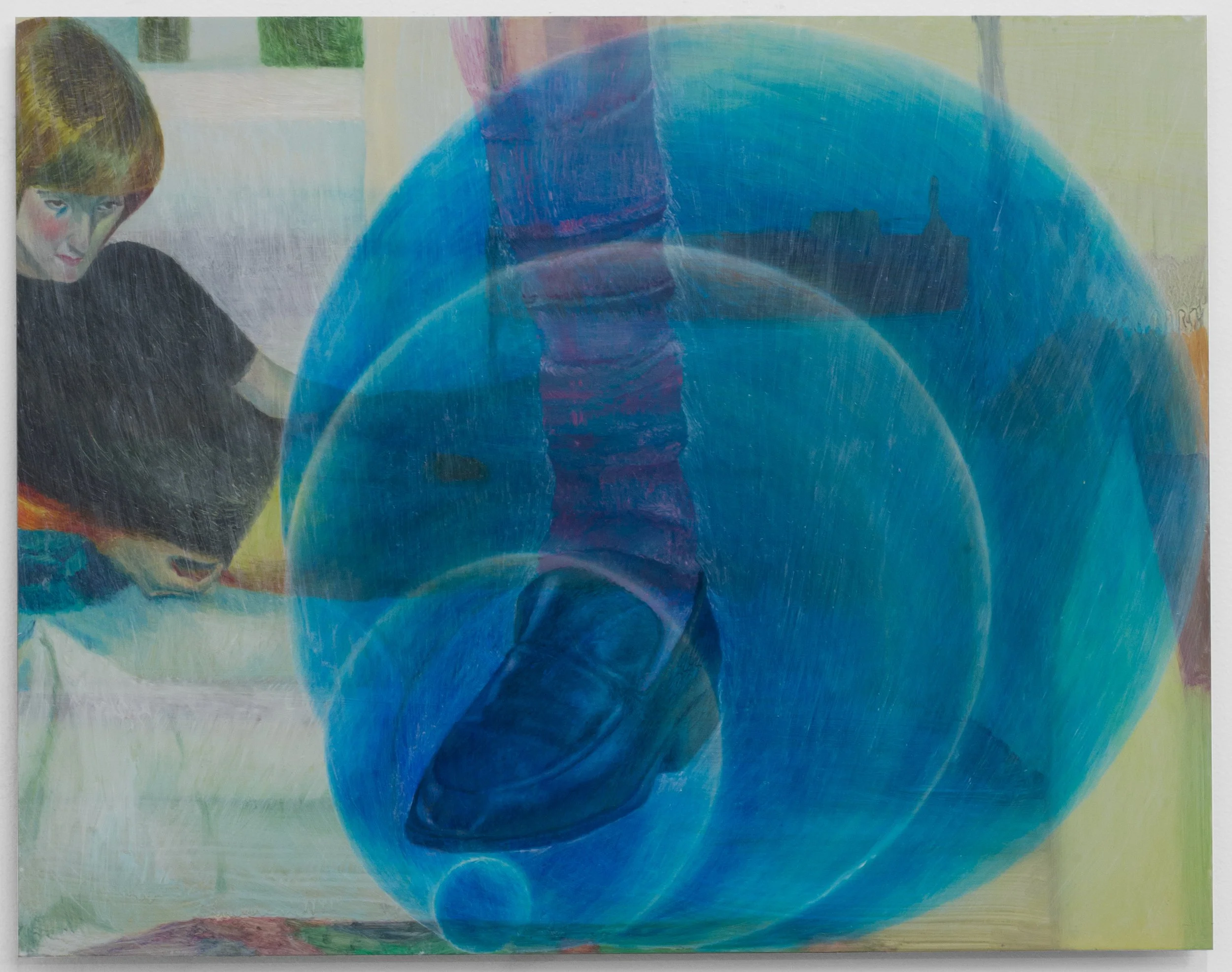
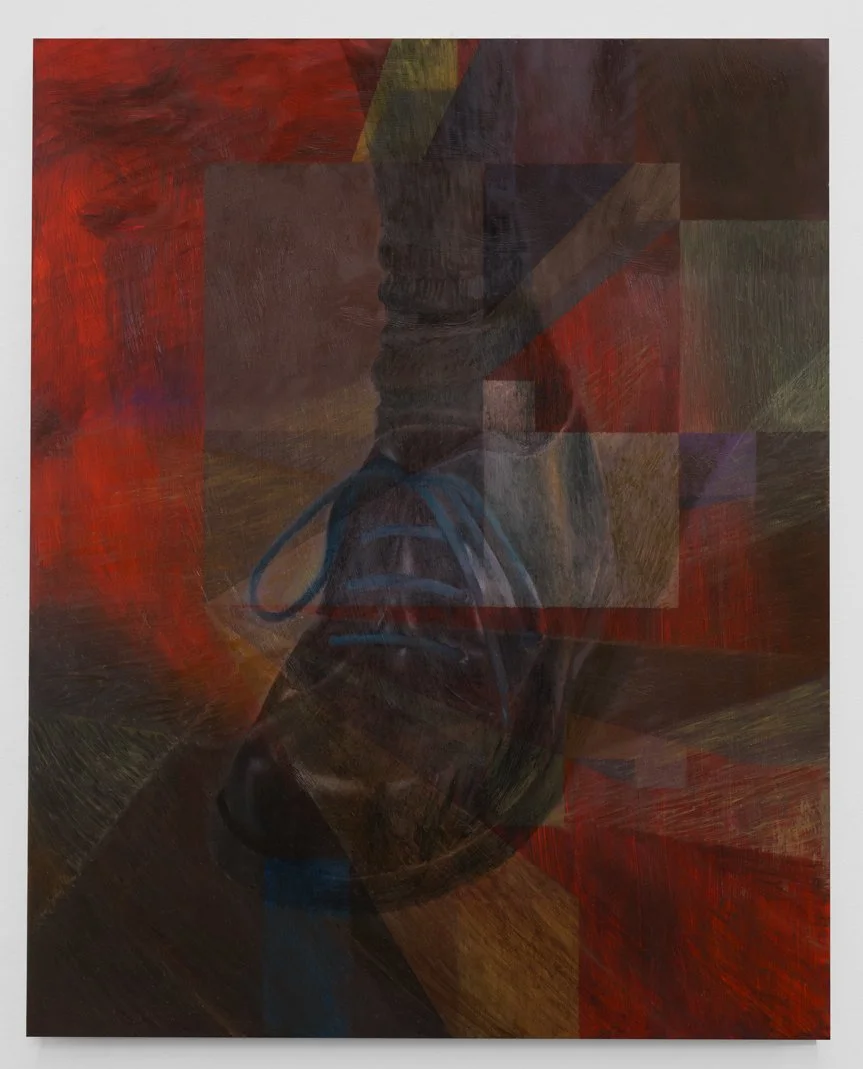
Raúl Aguilar Canela's painting practice examines how the visual language of success, productivity, and acceleration shapes contemporary subjectivity. He is drawn to the symbols of corporatism and professional culture—arrows, stars, bars, and global imagery—and how these forms circulate as promises of achievement, mobility, and self-optimization. In his work work, these motifs are exaggerated, fragmented, and pushed to the point of collapse, becoming pastiches that reveal the aggression and emptiness embedded in their optimism.
While the imagery Aguilar Canela works with is sharp and forceful, his process is deliberately slow and attentive. Built through multiple layers of oil paint and an accumulation of small, careful gestures, the paintings resist the speed and efficiency they depict. This tension between visual aggression and physical gentleness is central to his practice. The artist approaches painting as both a critical and palliative medium—a space where irony gives way to affect. The work wrestles with the uneasy relationship between art’s capacity for care and the social, economic, and emotional forces that make such care necessary in the first place.
Raúl Aguilar Canela (b. 1988) is a Mexican-born artist based in Montreal. His work, bouncing between stylistic constraints and material explorations, reveals a particular interest in heterogeneity in the painting practice as well as a continuous infatuation towards the history of the discipline. He received his MFA from Virginia Commonwealth University (Richmond, VA) in 2021. He holds a BFA from Concordia University (Montréal) in 2014. Aguilar Canela has participated in residency programs at Banff Centre and Est-Nord-Est. His recent solo exhibitions include Purple Vein at L’Oeil de Poisson (2024) in Quebec City, Puple Rain at Diagonale (2024), in Montreal, Smart like a Sun at Patel Brown (2024), in Toronto, and Please, no more motivated bastards (2025), at D.D.D.D., in NY. In 2019, his work was selected to be part of the Bienal de Pintura Rufino Tamayo XVIII, in México City.
Recent Exhibitions
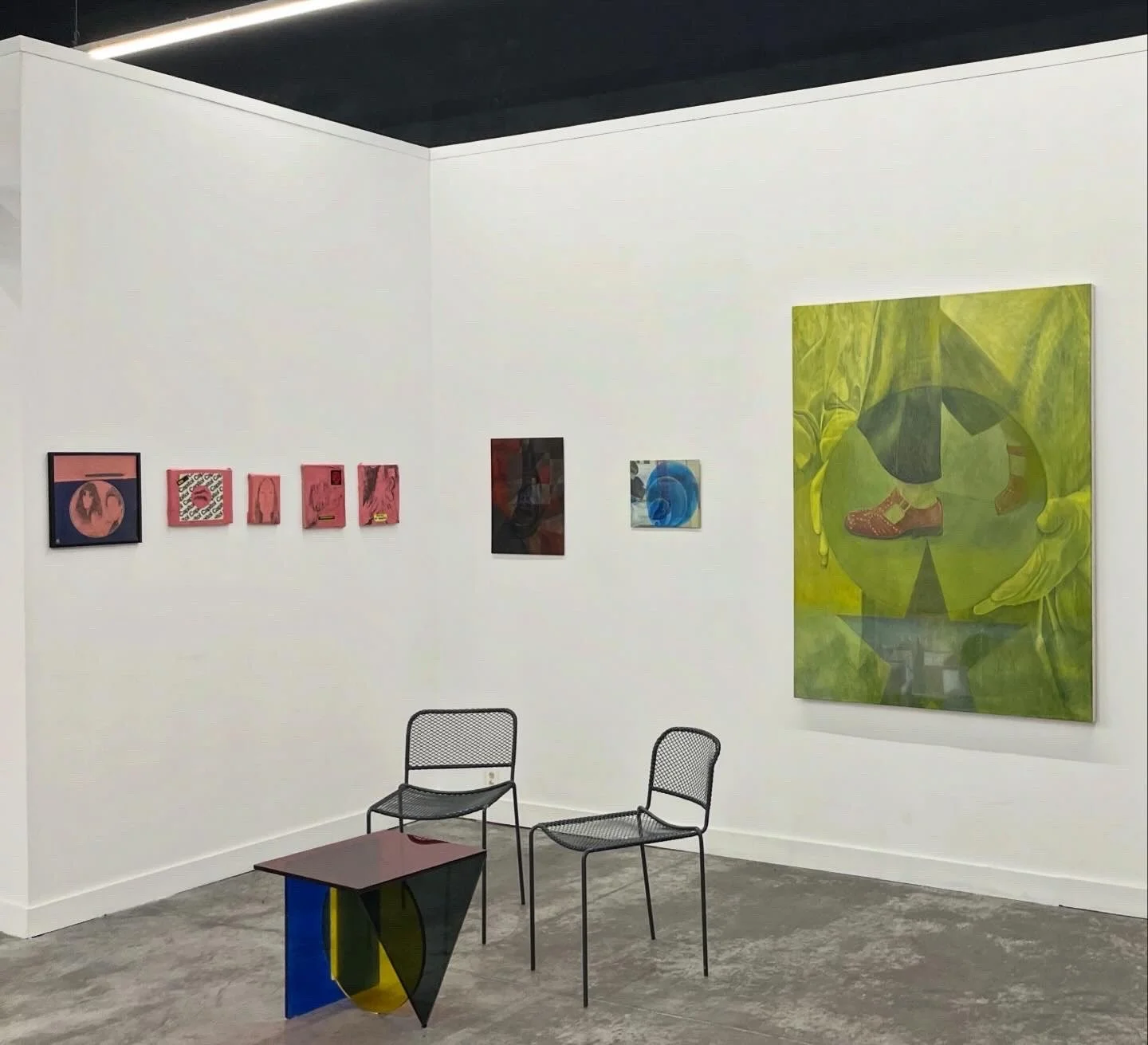
From Feria Material - Mexico City
From February 5-8, 2026